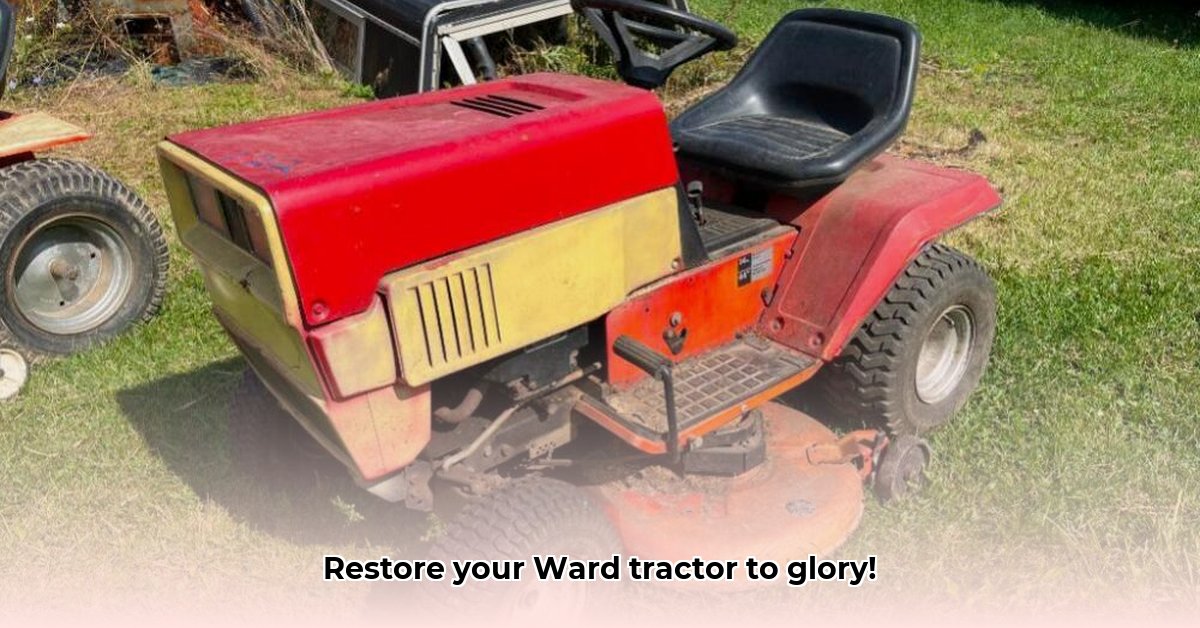
A Legacy of Mowers: Montgomery Ward and the Allure of Vintage Tractors
Montgomery Ward, a name synonymous with mail-order retail history, also left an indelible mark on the landscape of lawn tractors. These machines, often manufactured by companies like Bolens and Gilson under the Montgomery Ward brand, represent a fascinating blend of Americana and agricultural engineering. Their appeal to collectors lies not just in their vintage charm, but also in the unique challenges and rewards of restoration. This guide serves as your comprehensive handbook, covering everything from identification to restoration and long-term care, empowering you to bring a piece of this history back to life. For shipping damage advice, see this helpful guide.
History and Manufacturing Partnerships: A Diverse Heritage
Montgomery Ward's foray into the lawn tractor market spanned several decades, resulting in a remarkable diversity of models. Their strategy of partnering with established manufacturers like Bolens, Gilson, and others led to a wide range of designs and features. This partnership approach, while creating a complex lineage of tractors, also offers a rich tapestry for the collector to explore. Pinpointing the manufacturer and year of production often requires detective work, utilizing serial numbers and visual cues. (High-quality images of various Montgomery Ward tractor models from different manufacturers would be included here). Understanding these partnerships is crucial for effective parts sourcing and restoration down the line. Did you know that certain model years incorporated innovations ahead of their time?
Identifying Your Montgomery Ward Tractor: Deciphering the Clues
Identifying your specific Montgomery Ward tractor model is paramount for successful restoration. This process involves a combination of visual inspection and record-keeping. Begin by meticulously documenting the tractor's visual characteristics—take clear, high-resolution photographs focusing on the engine, chassis, and any remaining decals. Note the engine type (e.g., Briggs & Stratton, Kohler); the chassis design offers clues to the manufacturer; and remnants of decals might still reveal model numbers and manufacturing dates. The serial number, typically etched on the engine or chassis, is the most critical piece of information. This number, combined with online forums and resources dedicated to vintage tractors (such as MyTractorForum), will unlock your tractor's specific history and aid in parts identification. Remember, precise identification is the cornerstone of successful restoration.
Collecting and Assessing Value: More Than Just a Mower
The value of a Montgomery Ward lawn tractor is influenced by several key factors. Rarity, certainly, plays a significant role. Condition is equally important: a well-preserved, original tractor commands a higher price than one needing extensive restoration. The originality of parts—are they original Montgomery Ward components or replacements?—also factors significantly into value. Completeness is another crucial factor; tractors with all original parts, including attachments, are highly sought after. While online auction data can offer a general market perspective, remember that these are only indicators, influenced by numerous fluctuating factors. These resources offer general insight, but a hands-on assessment by experienced collectors is often recommended for a more precise valuation. What might seem like a minor detail to a novice could substantially affect its value to a seasoned collector.
Restoration and Repair: A Step-by-Step Guide to Rejuvenation
Restoring a Montgomery Ward lawn tractor is a journey that combines technical skill with historical appreciation. This meticulous process requires patience and a systematic approach.
Comprehensive Evaluation: Begin with a thorough inspection, documenting the condition of each component with detailed photographs. Note any missing, damaged, or deteriorated parts. This inventory forms the basis of your restoration plan.
Careful Disassembly: Disassemble the tractor meticulously, labeling each part and capturing the process with photos. Organize parts carefully to maintain assembly order.
Thorough Cleaning: Clean each part using appropriate solvents and tools, removing grease, grime, and rust without causing damage. This step is essential for assessing the condition of individual components accurately.
Repair and Replacement: Repair repairable parts and source replacements for those that are beyond repair. Online forums (like MyTractorForum) and specialized parts suppliers are invaluable resources here. Remember, prioritizing functional over cosmetic restoration is often the most practical approach.
Reassembly: Reassemble the tractor, following your detailed notes and photos. Precision and attention to detail are crucial for optimal functionality.
Testing and Fine-Tuning: Carefully test all functions, ensuring everything operates smoothly before proceeding. This includes testing engine start-up, drive systems, and any attachments. Safety is paramount!
(High-quality images and diagrams detailing each step would be strategically placed throughout this section)
Maintaining Your Restored Tractor: Ensuring Longevity
Proper maintenance is key to preserving your restored Montgomery Ward tractor. Regular lubrication, oil changes, and air filter replacements are essential. Use high-quality fuel and consider appropriate fuel additives. Always store the tractor indoors, preferably in a climate-controlled environment, using a protective cover to shield it from the elements. By proactively attending to these maintenance tasks, you ensure the longevity and aesthetic beauty of your carefully restored piece of Americana. Think of it as preventative care – a small investment in time and materials that yields significant long-term dividends.
Online Communities and Resources: Connecting with Fellow Enthusiasts
The online community of vintage tractor enthusiasts is a valuable asset. Forums like MyTractorForum (https://www.mytractorforum.com/) provide a platform for sharing knowledge, finding parts, and connecting with fellow restorers. Engaging with this community can be a powerful source of support and inspiration as you embark on your restoration journey.
Conclusion: A Rewarding Journey into the Past
Restoring a Montgomery Ward lawn tractor is a rewarding undertaking that marries mechanical skill with historical preservation. By following this guide and engaging with the online community, you can confidently bring this fascinating piece of American history back to life, enjoying the satisfaction of a project well done and a tangible connection to the past.